Dubai has always been a city defined by its forward-thinking vision and its remarkable ability to turn ambitious blueprints into tangible realities. As the emirate continues to experience unprecedented population growth and a massive influx of international businesses, the need for seamless connectivity has never been more critical. At the very heart of this continuous urban evolution is a relentless commitment to maintaining fluid mobility across its vast and dynamic landscape. In one of the most significant municipal announcements of the decade, it has been confirmed that Dubai is set to build a new multi-million-dollar road parallel to Sheikh Zayed Road. This monumental civil engineering project is not just a standard highway upgrade; it represents a structural reimagining of how people, goods, and services will move through the central arteries of the city for decades to come.
For many years, the E11 expressway has functioned as the primary backbone of the emirate, facilitating travel from the borders of Abu Dhabi all the way through to the northern emirates. However, as the neighborhoods surrounding this iconic highway have grown into massive commercial and residential hubs, the mixture of long-distance commuters and local district traffic has led to increasing pressure on the network. The introduction of a dedicated Sheikh Zayed Road parallel road is a brilliant structural solution designed to segregate these two highly distinct types of transit. By providing an alternative express route specifically for local commuters, the city can preserve the high-speed efficiency of the main highway while simultaneously improving daily access to all adjacent communities.
This comprehensive guide will explore every facet of the upcoming Sheikh Zayed Road parallel road. We will dive deep into the specific mechanisms that make this project a cornerstone of modern urban planning, examining its initial strategic funding, complex architectural design, integration with wider transport networks, and profound impact on local property markets.
The Strategic Vision and Unprecedented Financial Commitment
The realization of an infrastructure project as massive as a new Sheikh Zayed Road parallel road requires an extraordinary level of financial commitment and strategic foresight from the highest levels of leadership. The foundation for this specific initiative was laid when the government approved the Dubai Executive Council AED 18 billion package. This vast financial allocation is designed to stimulate various sectors of the economy, but a highly significant portion is dedicated exclusively to upgrading the physical civic framework of the city. High-performing urban mobility is widely recognized as the primary catalyst for economic vitality, and this funding package ensures that the emirate remains highly competitive on the global stage by eliminating logistical friction.
Within this robust financial framework, Dubai transport infrastructure projects are meticulously prioritized based on their ability to deliver immediate traffic relief and long-term network capacity. The new parallel corridor is unequivocally the crown jewel of these current initiatives. The core strategy is to move away from simply widening existing surface streets, an approach which often causes massive local disruption and yields diminishing returns. Instead, municipal planners are focusing entirely on creating new, grade-separated transit corridors that operate independently of the existing ground-level grid. This modern approach is fundamental to the broader Dubai 2030 transport completion plan, a sweeping municipal agenda that aims to establish a highly resilient, multi-modal transport network by the end of the current decade.
The Dubai 2030 transport completion plan is built on the core premise that every major residential and commercial node in the city should be highly accessible, regardless of the time of day or peak rush hours. By fully funding a brand-new Sheikh Zayed Road parallel road, the government is effectively future-proofing the central business districts against the expected population surge over the next ten to fifteen years. It is a highly proactive rather than reactive measure, demonstrating the visionary ethos that has come to define the leadership of the emirate. This massive capital injection into Dubai transport infrastructure projects not only ensures smoother daily commutes but also creates thousands of specialized construction, engineering, and administrative jobs, further stimulating the local economy during the extensive development phase.
Decoding the First Al Khail Street Development Plan
To truly understand the sheer magnitude of the new Sheikh Zayed Road parallel road, one must closely examine the technical blueprints and structural specifications of the First Al Khail Street Development Plan. This master plan serves as the operational blueprint for the new highway, outlining the specific structural interventions required to build a massive road network right through the middle of an already developed, high-density urban environment. The First Al Khail Street Development Plan is widely considered one of the most ambitious civil engineering projects ever undertaken in the region, primarily because it requires constructing a massive new transit spine without halting the daily commercial and residential activities of the city below.
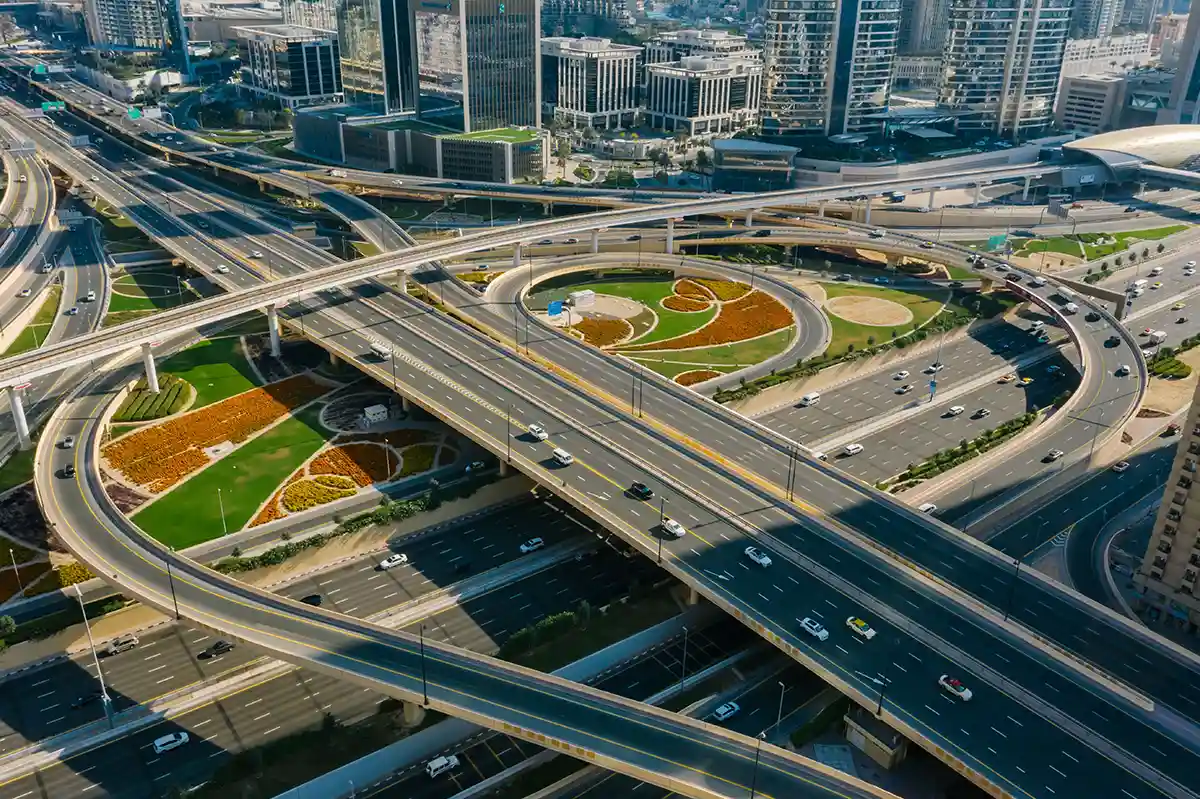
At the absolute core of this master plan is the construction of a spectacular 30km viaduct and bridge ramps system. Building a traditional surface highway was completely out of the question due to the lack of available vacant land and the severe disruption it would cause to existing premium neighborhoods. Instead, visionary engineers are lifting the highway directly into the sky. The 30km viaduct and bridge ramps will weave seamlessly through the urban canopy, carrying thousands of vehicles high above the congested surface intersections. This critical structural elevation is precisely what allows the new Sheikh Zayed Road parallel road to function as a true, uninterrupted express bypass.
A highly critical component of this elevated network is the First Al Khail Street elevated carriageway. This specific section of the mega-project acts as the primary high-speed transit deck, featuring multiple wide lanes in each direction dedicated to continuous, uninterrupted traffic flow. The First Al Khail Street elevated carriageway will utilize state-of-the-art precast concrete segments, which are manufactured off-site and carefully assembled during low-traffic night hours. This meticulous construction method ensures that the immense weight and structural complexity of the Sheikh Zayed Road parallel road can be managed safely over active city streets. The seamless integration of these massive elevated decks with the complex bridge ramps will allow vehicles to ascend and descend into key business districts with minimal braking, preserving the kinetic momentum of the traffic flow and maximizing hourly vehicle throughput across the entire network.
Navigating the Rigorous Procurement and Construction Processes
Turning the ambitious First Al Khail Street Development Plan from a digital architectural rendering into a concrete reality relies heavily on an incredibly rigorous Roads and Transport Authority (RTA) procurement process. Mega-projects of this unprecedented scale cannot be handed to just any standard contractor. They require elite consortiums of international engineering firms, specialized structural architects, and advanced logistics coordinators. The strict Roads and Transport Authority (RTA) procurement guidelines mandate that every single bidding entity demonstrate a flawless, proven track record of executing heavy elevated highway projects in highly active, densely populated urban zones.
The initial phases of this procurement journey focus heavily on deep feasibility studies, advanced geotechnical surveying, and comprehensive environmental impact assessments. Bidders competing for the contract to build the Sheikh Zayed Road parallel road must present highly detailed logistical strategies outlining exactly how they will transport massive steel beams and concrete girders through the city without causing gridlock. Furthermore, the modern Roads and Transport Authority (RTA) procurement standards require the mandatory integration of smart highway technologies right from day one. This means the chosen contractors must embed fiber-optic communication sensors, dynamic weight-in-motion scales, and automated incident detection systems directly into the asphalt and concrete while the road is actively being built.
As the complex tendering process concludes and official ground is broken, extremely strict oversight mechanisms will be implemented on-site to ensure the project stays perfectly aligned with the demanding deadlines of the Dubai 2030 transport completion plan. The total transparency, rigid safety protocols, and sheer efficiency of the Roads and Transport Authority (RTA) procurement process give international investors and local residents immense confidence. It guarantees that the Sheikh Zayed Road parallel road will be delivered exactly on time, strictly within budget, and to the absolute highest international civil safety standards.
Revolutionizing Urban Flow with Advanced Congestion Solutions
The primary motivation behind funding and constructing a massive Sheikh Zayed Road parallel road is to implement highly effective Dubai traffic congestion solutions. Modern urban traffic science dictates that chronic congestion is rarely solved merely by adding extra lanes to an already overwhelmed existing road. Instead, it is permanently solved by providing highly attractive alternative routes that actively siphon off specific demographic profiles of drivers. In central Dubai, a highly significant portion of peak-hour congestion is caused by drivers making relatively short, localized trips between adjacent neighborhoods, who are forced to mix awkwardly with drivers attempting to travel all the way to neighboring emirates.
By introducing the new parallel corridor, city planners are executing one of the most sophisticated Dubai traffic congestion solutions currently seen anywhere in the world. The elevated bypass will act as a massive municipal relief valve, absorbing the local district-to-district traffic and leaving the main E11 express lanes entirely free for regional, long-distance travelers. When local commuters logically choose to utilize the new Sheikh Zayed Road parallel road, they will no longer need to navigate the turbulent merge lanes, aggressive weaving patterns, and complex surface interchanges that currently slow down the main highway system.
The ultimate metric of success for this entire multi-million-dollar project will be the highly anticipated Sheikh Zayed Road travel time reduction. Traffic modeling experts utilizing advanced AI simulations predict that once the First Al Khail Street elevated carriageway is fully operational, the peak-hour transit times along the central urban corridor will drop dramatically. This specific Sheikh Zayed Road travel time reduction will return countless hours of lost productivity to the corporate workforce, reduce automotive emissions caused by thousands of idling engines, and significantly lower the daily stress levels of hundreds of thousands of commuters. Providing a highly reliable, high-speed Sheikh Zayed Road parallel road translates directly into a substantially higher daily quality of life for the entire metropolitan population.
Managing Complex Traffic Patterns Across Key Districts
To fully appreciate the localized impact of the new infrastructure, one must look very closely at how it directly addresses the notorious Al Barsha Al Quoz Business Bay Meydan traffic. These four distinct districts represent a massive concentration of the city's residential wealth, commercial power, and cultural significance. However, their highly interconnected traffic flows have historically been a major point of friction for daily commuters. The Sheikh Zayed Road parallel road is physically aligned and structurally designed to interface perfectly with these key neighborhoods, providing tailored transit solutions that respect the unique character of each specific zone.
In Al Barsha, a fully mature and highly populated residential and retail district, daily commuters often face frustrating delays when trying to exit their peaceful community and merge onto the busy main highway. The new parallel route will provide Al Barsha residents with dedicated, direct elevated access ramps. This means families driving to top-tier schools in other districts or corporate professionals heading to the financial center can bypass local neighborhood traffic entirely, seamlessly joining the express flow of the Sheikh Zayed Road parallel road in a matter of minutes.
The traffic situation in Al Quoz requires a completely different engineering approach. As a historic industrial zone rapidly transforming into a highly trendy arts, design, and commercial district, Al Quoz deals with a heavy, complex mixture of large commercial freight trucks and small private passenger vehicles. The First Al Khail Street Development Plan includes highly specific structural access points that will help safely separate these vastly different vehicle types. This will allow heavy logistics trucks to access warehouses without blocking the smaller vehicles visiting boutique art galleries and cafes. Managing this highly specific segment of the Al Barsha Al Quoz Business Bay Meydan traffic will preserve the creative, walkable charm of the area while aggressively supporting its commercial and industrial growth.
For Business Bay, the economic stakes are exceptionally high. As a premier corporate headquarters location, tens of thousands of global executives transit through the district daily. The Sheikh Zayed Road parallel road will skirt the western edge of Business Bay, offering a high-speed exit route that entirely bypasses the dense cluster of skyscrapers and surface-level traffic lights. This rapid dispersal capability is absolutely essential for maintaining the district's hard-earned reputation as a highly accessible, globally competitive business hub.
Finally, Meydan, known internationally for its sprawling luxury villas, world-class sporting venues, and massive waterfront development projects, requires incredibly robust arterial connections to properly integrate with the rest of the city. The new elevated highway will cleanly bridge the spatial gap between Meydan and the older coastal districts, offering residents a straight, uninterrupted high-speed shot toward the beaches and marinas. By comprehensively addressing the Al Barsha Al Quoz Business Bay Meydan traffic, the Sheikh Zayed Road parallel road effectively stitches these incredibly diverse neighborhoods into a single, cohesive, highly accessible urban fabric.
Synergy with Wider Road Expansion Initiatives
It is crucial to understand that the Sheikh Zayed Road parallel road does not exist in a vacuum. It is a critical, central piece of a much larger puzzle involving continuous, city-wide Dubai RTA road expansion. Expert city planners operate strictly on the principle of network synergy, meaning that every single new road, bridge, or tunnel must connect flawlessly with existing and future projects to compound their overall benefits. The new parallel corridor is explicitly designed to intersect and interact seamlessly with several other major civic upgrades currently underway across the emirate.
A prime example of this highly calculated synergy is the seamless integration with the Hessa Street Development Project. Hessa Street has long been a incredibly vital east-to-west cross-city connector, and its current massive expansion aims to effectively double its hourly capacity. When the newly constructed Sheikh Zayed Road parallel road meets the newly upgraded Hessa Street Development Project, the resulting multi-level interchange will be an absolute marvel of modern traffic engineering. Vehicles traveling north or south on the new elevated viaduct will be able to seamlessly transition to the east or west via the Hessa Street Development Project without encountering a single traffic light or stop sign. This creates a highly fluid, multi-directional express grid that allows drivers to bypass the most congested sectors of the city entirely.
Similarly, the new parallel route will deeply and efficiently integrate with the Latifa bint Hamdan Corridor. The Latifa bint Hamdan Corridor serves as a crucial lateral link that moves heavy commercial traffic across the industrial and commercial heartlands of the emirate. By connecting the First Al Khail Street elevated carriageway directly to the Latifa bint Hamdan Corridor, the authorities are providing commercial delivery fleets and daily private commuters with highly efficient, grade-separated shortcuts. These heavily interconnected Dubai RTA road expansion efforts ensure that the mobility benefits of the Sheikh Zayed Road parallel road radiate outward, substantially improving travel times even for drivers who never actually set their tires on the new elevated highway itself.
The Transformative Effect on the Real Estate Market
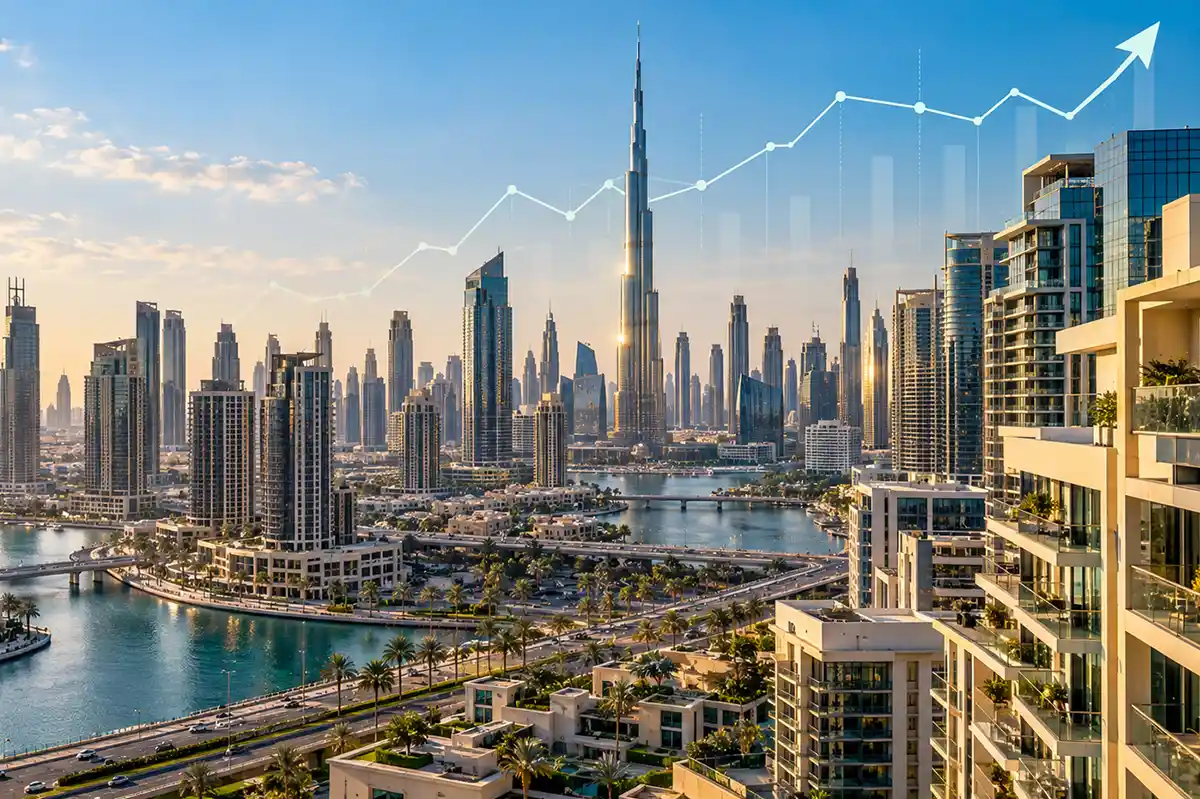
Beyond the highly visible, immediate benefits of significantly reduced commute times and smoother commercial logistics, the construction of the Sheikh Zayed Road parallel road will have a profound, highly lucrative, and lasting impact on the local property market. In the strict study of urban economics, there is a direct and totally undeniable correlation between major civic infrastructure improvements and localized real estate appreciation. When a government invests billions of dollars into upgrading a specific transit corridor, the land and developments surrounding that corridor inherently become significantly more valuable. The new highway is set to dramatically enhance the appeal of multiple districts, catching the immediate attention of savvy global investors participating in Dubai real estate.
For active buyers who are currently evaluating premium properties for sale in highly sought-after areas like Al Barsha, Business Bay, and Meydan, the impending completion of the Sheikh Zayed Road parallel road serves as a massive, undeniable catalyst for future capital appreciation. Historically speaking, residential and commercial units located strictly within a few minutes of a newly opened, high-speed arterial route see a rapid, steady increase in baseline valuation as the infrastructure nears total completion. Homeowners and corporate investors who secure tangible assets in these specific influence zones today are perfectly positioning themselves to reap significant financial rewards once the massive 30km viaduct and bridge ramps are fully operational. The firm promise of an effortless, stress-free daily commute makes these specific properties highly desirable to high-net-worth individuals and top-tier corporate executives.
The rental market is equally, if not more, sensitive to major municipal mobility upgrades. Modern tenants place an immense premium on daily convenience, often heavily prioritizing homes that offer a predictable, stress-free drive to their respective workplaces. As the massive concrete pillars of the new parallel corridor begin to take shape across the skyline, demand for properties for rent in the adjacent neighborhoods will inevitably experience a massive surge. Landlords and property managers can easily expect lower vacancy rates and the distinct ability to command premium rental yields, as high-income tenants will gladly pay a premium for the luxury of completely bypassing the traditional rush-hour gridlock on the main E11 highway. The highly anticipated Sheikh Zayed Road travel time reduction translates directly into greatly increased tenant retention and overall resident satisfaction.
Furthermore, the sheer timeline and scale of this mega-project present a truly golden opportunity for forward-thinking investors who are highly interested in pre-construction development phases. Purchasing premium real estate before a major civic project is fully finished is widely considered one of the most reliable strategies for generational wealth generation in the emirate. There are currently numerous high-end, master-planned communities launching directly alongside the projected route of the new Sheikh Zayed Road parallel road. By securing highly desirable off plan properties in UAE located directly within the designated influence zone of this new transport corridor, smart investors can lock in significantly lower entry prices today. They will then enjoy substantial, compounded equity growth by the time the massive Dubai 2030 transport completion plan is fully realized and the ribbon is cut on the new highway.
Ultimately, successfully navigating the incredibly dynamic and fast-paced landscape of Dubai real estate requires a deep, fundamental understanding of how macro-level civic projects directly influence micro-level property dynamics. The new Sheikh Zayed Road parallel road is absolutely not just a transportation upgrade; it is a highly potent wealth-creation engine for the entire spectrum of neighborhoods it is designed to serve.
Environmental Sustainability and Smart Highway Technology
As the emirate continues to massively expand its physical footprint, the strict commitment to environmental sustainability remains a paramount concern for modern city planners. The complex construction of the Sheikh Zayed Road parallel road is being meticulously executed with incredibly strict adherence to modern green building standards. Large-scale Dubai transport infrastructure projects are absolutely no longer evaluated solely on their total vehicle throughput. They are now equally judged on their overall lifecycle carbon footprint and their unique ability to integrate harmoniously with the existing urban ecosystem.
The highly detailed First Al Khail Street Development Plan incorporates several cutting-edge eco-friendly engineering practices. For instance, the exact materials used to physically construct the massive First Al Khail Street elevated carriageway include specialized, high-strength concrete mixes that require significantly less water and generate much lower carbon emissions during the industrial curing process. Additionally, the premium asphalt utilized on the surface levels of the 30km viaduct and bridge ramps is scientifically designed to minimize tire rolling resistance, which actively helps reduce the overall fuel consumption of the thousands of vehicles utilizing the corridor daily.
Moreover, by successfully implementing these advanced Dubai traffic congestion solutions, the new Sheikh Zayed Road parallel road will significantly decrease the total amount of time combustion-engine vehicles spend idling in bumper-to-bumper traffic. Idling engines are a highly recognized major source of localized urban air pollution. By facilitating a continuous, smooth flow of traffic and achieving a highly notable Sheikh Zayed Road travel time reduction, the mega-project will directly help lower greenhouse gas emissions across the entire central municipal grid. Furthermore, intelligent, adaptive LED lighting systems, powered in part by seamlessly integrated solar panels along the sound barriers, will brightly illuminate the elevated decks, vastly reducing the overall energy demands of this massive municipal infrastructure asset.
Looking toward the horizon, the Sheikh Zayed Road parallel road is fully designed to physically accommodate the absolute next generation of transportation technology. The initial funding provided by the Dubai Executive Council AED 18 billion package heavily ensures that new civic projects are not merely catching up to current capacity demands but are actively laying the physical and digital groundwork for future municipal innovations. As autonomous vehicles and hyper-connected smart car technologies become increasingly prevalent on global roads, the new parallel corridor will serve as a premier, real-world testing and operational ground for these massive advancements. The deep integration of smart fiber-optic sensors along the entirety of the First Al Khail Street Development Plan will allow autonomous vehicles to seamlessly communicate directly with the highway infrastructure itself, ensuring maximum safety and unparalleled efficiency as the city races toward the ambitious goals of the Dubai 2030 transport completion plan.
Frequently Asked Questions
What is the new road project being built parallel to Sheikh Zayed Road?
The new municipal project is officially part of the massive First Al Khail Street Development Plan, a highly complex infrastructure initiative designed to create a massive, high-capacity alternative route straight through the center of the city. The project involves constructing a brand-new Sheikh Zayed Road parallel road that will feature a breathtakingly massive elevated viaduct and a highly extensive network of interconnecting structural ramps. This development is a key, foundational component of the broader Dubai transport infrastructure projects aimed squarely at radically enhancing urban mobility.
When will construction on the First Al Khail Street project start and finish?
The mega-project is currently advancing rapidly through the highly stringent, heavily regulated Roads and Transport Authority (RTA) procurement phases, where highly technical structural designs and specialized international contractors are being carefully finalized. Heavy on-the-ground construction is heavily projected to commence in the latter half of 2027. The entire transit corridor is expected to be fully operational and open to the public by the end of 2030, aligning perfectly with the strategic municipal milestones of the comprehensive Dubai 2030 transport completion plan.
How will the new First Al Khail Street corridor reduce traffic on Sheikh Zayed Road?
The new transit corridor serves as one of the most structurally effective Dubai traffic congestion solutions by actively, physically separating local district commuters from long-distance regional travelers. By absorbing the exceptionally heavy local traffic onto the newly built elevated bypass, the project instantly removes thousands of vehicles per hour from the main E11 express lanes. This physical segregation entirely eliminates major merging bottlenecks, directly leading to a highly significant Sheikh Zayed Road travel time reduction for all motorists operating in the central area.
Which districts in Dubai will benefit from the First Al Khail Street development?
The new Sheikh Zayed Road parallel road is strategically aligned and physically designed to provide the absolute maximum benefit to several highly specific, high-density municipal zones. The primary beneficiaries will overwhelmingly be the specific communities directly contributing to the heavy Al Barsha Al Quoz Business Bay Meydan traffic. Residents and corporate professionals in these four major, heavily populated districts will instantly gain direct, high-speed structural access to the massive elevated viaduct, allowing them to completely bypass congested surface streets.
What is the capacity and length of the planned elevated road corridor?
The sheer structural scope of the new project is truly massive. The absolute core of the municipal development features a staggering 15-kilometer continuous First Al Khail Street elevated carriageway. When perfectly combined with the supporting exit and entry infrastructure, the total project encompasses a truly remarkable 30km viaduct and bridge ramps system. The elevated roadway will proudly feature three exceptionally wide lanes in each direction, providing a highly robust, high-speed transit deck for thousands of daily local commuters.
How much traffic capacity will the new road add per hour?
Once totally fully operational and open to the general public, the newly constructed Sheikh Zayed Road parallel road is heavily engineered to safely accommodate approximately 9,000 passenger vehicles per hour. This massive, sudden influx of new structural capacity will fundamentally alter how daily traffic flows through the center of the city, providing immense, immediate relief to existing surface roads and strongly supporting the continued economic and residential population growth of all the surrounding neighborhoods.
Unlock Premier Real Estate Opportunities with Gi Properties
The official announcement of the new Sheikh Zayed Road parallel road unequivocally marks a highly pivotal moment in the ongoing structural evolution of the emirate. As the city continues to vastly expand its physical horizons, massive investments heavily funded by the Dubai Executive Council AED 18 billion package guarantee that the physical municipal infrastructure remains absolutely world-class. From the sheer engineering marvels of the massive First Al Khail Street elevated carriageway to the highly complex, seamless structural integration with the heavily expanded Hessa Street Development Project and the vital Latifa bint Hamdan Corridor, this project is a true testament to highly visionary urban planning. The resulting massive improvements in daily mobility will dramatically elevate the daily quality of life for millions of local residents and further solidify the city's pristine reputation as a premier global destination for high-end commerce and luxury living.
For international investors and local homebuyers alike, the massive economic ripple effects of this expansive Dubai RTA road expansion present truly unparalleled opportunities for generational wealth generation. Real estate properties situated directly along this massive new transit spine are perfectly poised for highly significant capital appreciation and incredibly sustained rental demand over the coming years. Successfully navigating these highly lucrative property opportunities requires the direct guidance of seasoned real estate professionals who deeply understand the intricate, direct relationship between major municipal infrastructure development and localized property valuation.
If you are actively looking to fully capitalize on the massively transformative economic impact of the new Sheikh Zayed Road parallel road, partnering with an elite, highly experienced real estate agency in Dubai is absolutely your most strategic move. The highly dedicated team of expert property consultants at Gi Properties possesses the deep market insights and incredibly comprehensive portfolio access needed to perfectly align your personal investments with the city's massive future growth. Contact Gi Properties today to expertly explore the finest real estate investment opportunities perfectly positioned along tomorrow's most vital urban corridors.