Infrastructure development serves as the foundational driver behind long-term urban expansion, commercial vitality, and real estate valuation across the United Arab Emirates. As the country experiences consistent economic momentum and an expanding population, government leadership continues to pioneer high-capacity transportation solutions. Recently, the Dubai Media Office announced the formal approval of a transformative, multi-billion dirham highway development engineered to reshape connectivity throughout the country.
This landmark initiative establishes the Dubai fourth corridor, an ambitious 80-kilometre highway network planned to link Sharjah directly with Abu Dhabi while bypassing the dense city center. As a defining project within the broader landscape of Dubai infrastructure projects, this arterial bypass promises to ease commuter bottlenecks, optimize logistics operations, and unlock immense long-term value across the Dubai southern growth area.
For investors, residents, and real estate professionals, understanding the engineering framework, project breakdown, and property market impact of this development is essential. This detailed analysis examines every dimension of the new fourth corridor in Dubai, illustrating how this expansive blueprint will transform daily commutes, freight movement, and real estate opportunities.
Understanding the Strategic Vision Behind the New Fourth Corridor in Dubai
To grasp the full impact of the Dubai fourth corridor, it is helpful to look at how the national road grid has evolved. Historically, inter-emirate transit has relied heavily on three principal arterial routes: Sheikh Zayed Road E11 (which becomes Al Ittihad Road toward Sharjah), Sheikh Mohammed bin Zayed Road E311, and Emirates Road E611. Together, these existing thoroughfares accommodate hundreds of thousands of vehicles every day, connecting major residential communities with key employment hubs.
However, rapid population growth and expanding commercial transport have stretched these routes to their operational limits. Daily commuters traveling along the primary Abu Dhabi, Dubai, Sharjah highway network regularly encounter heavy congestion during peak hours. In response, municipal authorities designed a dedicated bypass artery capable of diverting heavy transit traffic away from central urban sectors without requiring intrusive road expansions through established neighborhoods.
Functioning as a key Dubai fourth inter-emirate highway, this newly planned alignment creates a high-capacity transit route through the eastern desert corridors. By shifting long-distance traffic and heavy freight transport away from urban residential areas, the new highway in Dubai will enhance overall safety, reduce vehicular idle times, and establish a far more efficient supply chain pathway for commercial enterprise across the UAE.
Technical Scope, Phasing, and Civil Engineering
Given the immense scope of the highway, execution has been split into two well-defined operational phases. This phased construction approach ensures rapid civil delivery while maintaining structural efficiency across every sector.
Phase 1: Sharjah to Dubai Al Ain Road
The northern segment of the development, designated as Phase 1, covers roughly 30 kilometres from Al Shanouf Road in Sharjah down to the Dubai Al Ain Road junction. As announced by the Dubai media office, Phase 1 represents a capital expenditure of AED 3.5 billion.
Designed as a 12-lane dual carriageway with six lanes in each direction, Phase 1 is built to handle a maximum flow of up to 24,000 vehicles per hour across both directions. Constructing this initial segment involves building approximately 55 lane-kilometres of surface roadways, 2.5 kilometres of vehicular tunnels, and 21 kilometres of elevated bridges and directional ramps.
A key element of this initial stage involves the expanded Dubai Al Ain road widening effort. Under this plan, the current Dubai Al Ain road will be widened from three lanes to four lanes in each direction along the section between Emirates Road and Lehbab Road. In addition, four major intersections along the route will undergo structural overhauls to streamline traffic flow. Once fully operational, Phase 1 is expected to serve over 600,000 residents and cut travel times along this sector by up to 60 percent—reducing a typical 35-minute drive down to just 14 minutes.
Phase 2: Extension Toward Abu Dhabi
Following the completion of the northern section, Phase 2 will push the corridor southward by approximately 50 kilometres, creating a direct connection from Dubai Al Ain Road to Al Faya Road in Abu Dhabi. This southern extension integrates the eastern and southern growth zones directly into Abu Dhabi's highway network.
Phase 2 will incorporate roughly 190 lane-kilometres of surface roads, 3.5 kilometres of tunnels, and 157 kilometres of elevated structural ramps and bridges. Upon completion, this southern segment is projected to serve an estimated 3.1 million residents, reducing travel times between connected outer districts from 50 minutes down to 24 minutes—a 52 percent improvement in travel efficiency. Across the full 80-kilometre alignment, the completed project will feature 72 bridges, 17 tunnels, and 45 specialized drainage culverts engineered to manage heavy rainfall and protect desert road surfaces.
Integration with Logistics, Aviation, and Rail Networks
Beyond serving as a vehicle bypass, the new fourth corridor in UAE is strategically mapped to connect with several crucial national infrastructure assets, forming a unified transport and freight network.
A major beneficiary of this project is Al Maktoum international airport, located in the heart of Dubai South. As the airport expands into a massive global aviation hub, having fast, direct ground links for cargo handling and passenger transit becomes critical. The corridor provides a high-speed route for goods moving between northern manufacturing zones, industrial parks, and airport freight terminals without creating congestion in central city streets.
Additionally, the highway runs parallel to key segments of the Etihad Rail freight and passenger network. This geographical alignment allows for effortless multi-modal transport, enabling goods shipped by rail to be quickly transferred onto heavy transport vehicles for direct delivery across the country. By linking road, rail, and air networks, the new corridor reinforces the UAE's position as a premier trade and logistics center.
Environmental Protection and Sustainable Infrastructure Design
Building an 80-kilometre highway across desert terrain requires careful environmental oversight. Project engineers routed the corridor to preserve ecological balance around protected areas, such as the Al Marmoom desert conservation reserve and the nearby Al Wohoosh reserve. These sensitive sanctuaries house native desert flora and wildlife, requiring noise mitigation structures, dedicated wildlife crossings, and controlled construction footprints.
Furthermore, climate resilience has been built directly into the engineering framework. The inclusion of 45 specialized drainage culverts ensures that the highway stays operational during severe rain events, safely directing stormwater runoff away from traffic lanes to maintain road safety and structural integrity over the long term.
Easing Traffic Congestion and Enhancing Regional Mobility
For daily commuters, the most immediate benefit of the project is a noticeable decrease in Dubai traffic congestion. For years, cross-emirate drivers traveling between Sharjah and southern work districts have relied heavily on central arterial routes like Sheikh Zayed Road E11, Sheikh Mohammed bin Zayed Road E311, and Emirates Road E611.
By offering a high-capacity outer bypass, the new highway from Abu Dhabi to Sharjah absorbs a significant portion of long-distance traffic. Heavy transport vehicles and regional commuters can bypass suburban bottlenecks entirely, keeping speeds steady and lowering traffic density across inner municipal streets. Consequently, overall Dubai travel time to Abu Dhabi will improve, turning long commutes into smooth, predictable drives.
For property investors and home buyers trying to understand how these infrastructural changes influence real estate values, working with an experienced real estate agency in Dubai provides essential guidance when evaluating accessible, fast-growing neighborhoods.
Economic Growth and Long-Term Strategic Goals
The rollout of this megaproject aligns with broad national development programs, such as the Dubai Economic Agenda D33 and the Dubai Social Agenda 33. These initiatives focus on building economic resilience, improving urban liveability, and constructing adaptable, future-proof public infrastructure.
Investments in high-capacity transportation act as economic multipliers—reducing supply chain expenses, encouraging foreign investment, and fueling commercial real estate growth. As highlighted by the Dubai media office, proactive civil planning ensures the city stays well ahead of population growth while maintaining world-class mobility standards.
Real Estate Value in the Dubai Southern Growth Area
Major infrastructure announcements almost always trigger positive shifts within the real estate market. Across the UAE, property demand and capital growth correlate strongly with road connectivity, short commute times, and proximity to major transport hubs. With the introduction of this new highway corridor, investor attention is turning toward the Dubai southern growth area, opening up exciting opportunities for new master-planned communities and commercial projects.
The Impact on Dubai South Real Estate
Dubai South continues to develop into an independent urban center centered around Al Maktoum International Airport and the Expo City site. Previously, perceived travel distances to central Dubai made some buyers hesitate. The new highway corridor transforms this perception by establishing a direct, high-capacity connection to the district.
Investors considering a Dubai South property will find that faster travel connections convert peripheral locations into highly accessible residential choices. Shorter commute times make southern neighborhoods attractive to working professionals, logistics managers, and families looking for modern suburban living. Anyone exploring available market opportunities can browse current properties for sale across these high-growth southern communities to find well-priced residential and commercial options.
Growth in Emaar South and Master-Planned Neighborhoods
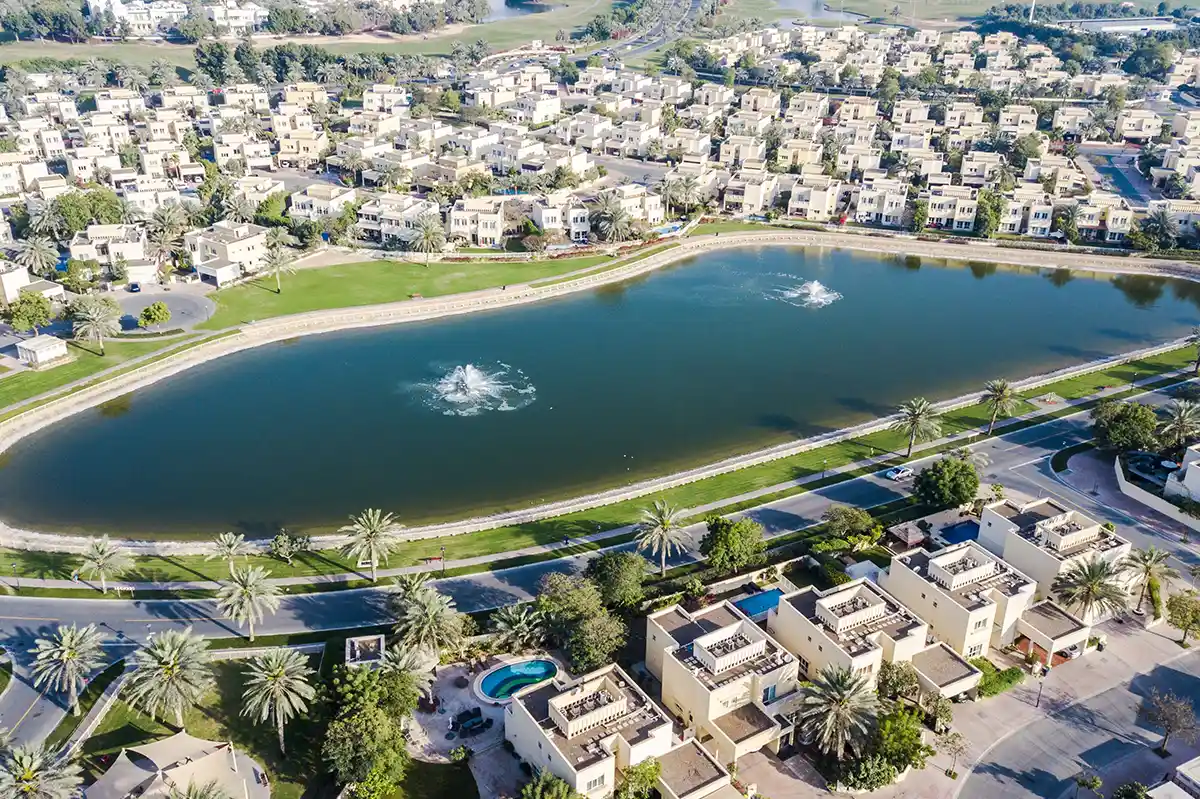
Among the top communities in the southern region, Emaar South stands out as a prime golf-course development offering green open spaces, modern architecture, and family-friendly amenities. The new corridor enhances Emaar South property values by significantly shortening drive times to central Dubai and neighboring emirates.
As buyers increasingly seek out communities with built-in accessibility, infrastructure improvements become key deciding factors. Whether buying completed residential units or evaluating off plan properties in UAE, investors recognize that ongoing public infrastructure development supports long-term property values.
At the same time, rental demand in outer master communities is growing rapidly. Corporate teams, logistics workers, and aviation specialists require modern homes near their workplaces. Landlords who maintain quality units are seeing strong interest from tenants looking for shorter daily commutes, making available properties for rent dependable income-generating investments.
Analyzing Infrastructure Investments and Property Trends
A common question among real estate buyers is whether new highway developments guarantee instant capital growth. While infrastructure is a primary driver of long-term value, successful property investment requires a clear look at market fundamentals.
The relationship between Dubai infrastructure and property prices depends on accessibility, local supply, and community development. When a major road project like the fourth corridor is announced, early investors often focus on land parcels and off-plan projects near future interchanges. As construction nears completion, reduced travel times make surrounding neighborhoods more practical to live in, driving tenant demand and capital growth.
However, market experts recommend looking beyond headline figures to assess project quality, developer track records, neighborhood facilities, and market supply. Combining broad infrastructure insights with detailed local market research helps buyers build a balanced, profitable property portfolio.
Frequently Asked Questions
What is the New Fourth Corridor in Dubai?
The New Fourth Corridor is an approved 80-kilometre strategic highway designed to link Al Shanouf Road in Sharjah with Al Faya Road in Abu Dhabi through eastern Dubai. It acts as a dedicated outer bypass to reduce traffic on existing inter-emirate routes and streamline long-distance freight and passenger transit.
How long will the New Fourth Corridor be?
The highway will extend across a total length of approximately 80 kilometres. The construction is divided into two phases: a 30-kilometre northern stretch in Phase 1 and a 50-kilometre southern stretch in Phase 2.
How much will the New Fourth Corridor Phase 1 cost?
Phase 1 represents an investment of approximately AED 3.5 billion (roughly $953 million USD), allocation approved under official directives from Dubai leadership.
How much time will the New Fourth Corridor save?
Travel savings vary across different project sections. Phase 1 is expected to lower a 35-minute commute down to 14 minutes (a 60 percent time saving), while Phase 2 will cut a typical 50-minute drive down to 24 minutes (a 52 percent efficiency improvement).
Which areas will the New Fourth Corridor connect?
The road connects Al Shanouf Road in Sharjah with Al Faya Road in Abu Dhabi, passing through eastern and southern Dubai. Key locations along the route include Al Maktoum International Airport, the Etihad Rail network, and environmental reserves such as Al Marmoom.
Will the New Fourth Corridor affect property prices in Dubai South?
Yes. Enhanced transport linkages generally raise the appeal and valuation of nearby residential communities. By reducing drive times and offering direct routes to national rail and airport hubs, the corridor supports steady property demand and long-term capital appreciation in Dubai South.
When will the New Fourth Corridor be completed?
In the official project announcement released by the Roads and Transport Authority (RTA) and the Dubai Media Office, a specific completion date or public opening timeline for the entire network was not specified.
Partner with Gi Properties
The approval of the Dubai fourth corridor highlights the UAE’s commitment to world-class urban planning and sustainable civil development. By connecting Sharjah, Dubai, and Abu Dhabi through a high-capacity 12-lane highway, the government is building an efficient transport backbone capable of supporting future economic expansion. For property investors, this major infrastructure initiative unlocks real long-term value across southern master communities and industrial hubs.
At Gi Properties, our expert team tracks major infrastructure developments to help buyers, sellers, and investors make informed decisions in the UAE property market. Whether you want to invest in emerging master developments or explore premium residential choices, our real estate specialists provide tailored advice every step of the way. Contact Gi Properties today to view exclusive property listings and discover market opportunities matched to your investment goals.