It is completely understandable that recent regional headlines have caused concern. When you see news regarding security in a region where you have—or are planning to have—significant financial interests, your first instinct is naturally to pause and reassess. However, seasoned investors often look past the immediate "noise" of geopolitical headlines to focus on the structural resilience of an economy.
Below is an analysis of why, despite the current climate, many institutional investors and high-net-worth individuals maintain confidence in Dubai's long-term economic trajectory.
The "Safe Haven" Effect: Why Global Capital Remains
In finance, a "safe haven" is defined by an asset or jurisdiction that retains its value—or even appreciates—during times of turbulence. While recent news cycles have created a "wait-and-watch" sentiment among some, historically, Dubai has benefited from capital seeking stability during global crises.
The primary reason is the UAE’s neutrality. Dubai has spent decades positioning itself as a neutral ground where East meets West. For investors fleeing volatility in other parts of the world, Dubai offers:
- A Tax-Friendly Environment: The absence of personal income tax and the 0–9% corporate tax structure remain globally competitive, regardless of regional politics.
- The Residency Advantage: The 10-year Golden Visa and other investor-friendly residency schemes allow individuals and families to secure a long-term base. Unlike a temporary investment, this creates a "structural" commitment; investors aren't just moving money, they are moving their lives and businesses here.
Economic Diversification: Beyond Oil
One of the most persistent misconceptions about Dubai is its reliance on oil. In 2026, Dubai’s economy is almost entirely powered by non-oil sectors. Its GDP is supported by a mix of:
- Trade and Logistics: As a global node linking Asia, Europe, and Africa, Dubai’s ports (like Jebel Ali) and aviation infrastructure are critical to the world economy. The global supply chain has a vested interest in the operational continuity of these hubs.
- Financial Services: The Dubai International Financial Centre (DIFC) hosts hundreds of global banks, hedge funds, and wealth management firms that operate under a regulatory framework designed to mirror global standards in London and New York.
- Tourism and Tech: With over 1,260 hotels and a rapidly growing AI and digital services sector, the economy is resilient because it is decentralized. No single disruption can derail the entire system.
Real Estate: Resilience through Liquidity
Real estate is often the first sector to be questioned during regional tension. However, the 2026 market is markedly different from the past.
- The "Cash King" Dynamic: In January 2026, nearly 60% of residential transaction value came from cash deals. This high level of liquidity acts as a massive shock absorber. Unlike markets where high interest rates and mortgage dependence make owners vulnerable to panic selling, the majority of Dubai property owners are holding equity-rich assets.
- Fundamental Demand: With a population that grew by hundreds of thousands over the last two years, the demand for housing is driven by organic growth and professional migration, not just speculative investment. While some "off-plan" buyers may pause, end-user demand for ready-to-move-in luxury and mid-market homes remains stable.
The Digital Fortress: Infrastructure Resilience
In 2026, security is as much about digital infrastructure as it is about physical borders.
- Digital Monitoring: The UAE government has implemented advanced digital platforms to monitor essential goods and market prices in real time. This ensures that even during periods of tension, the supply of basic commodities and services remains uninterrupted.
- Infrastructure Continuity: Authorities have activated contingency plans across ports and airports to ensure that logistics routes—the "pipes" of the global economy—remain operational. For an investor, knowing that the government has the state capacity to maintain the flow of goods and services is the ultimate reassurance.
Historical Resilience as a Benchmark
"Past performance does not guarantee future results," but it does provide a roadmap for how a market reacts to stress. Dubai has successfully navigated:
- The 2008 Global Financial Crisis.
- The 2020 Pandemic.
- Multiple periods of regional geopolitical volatility.
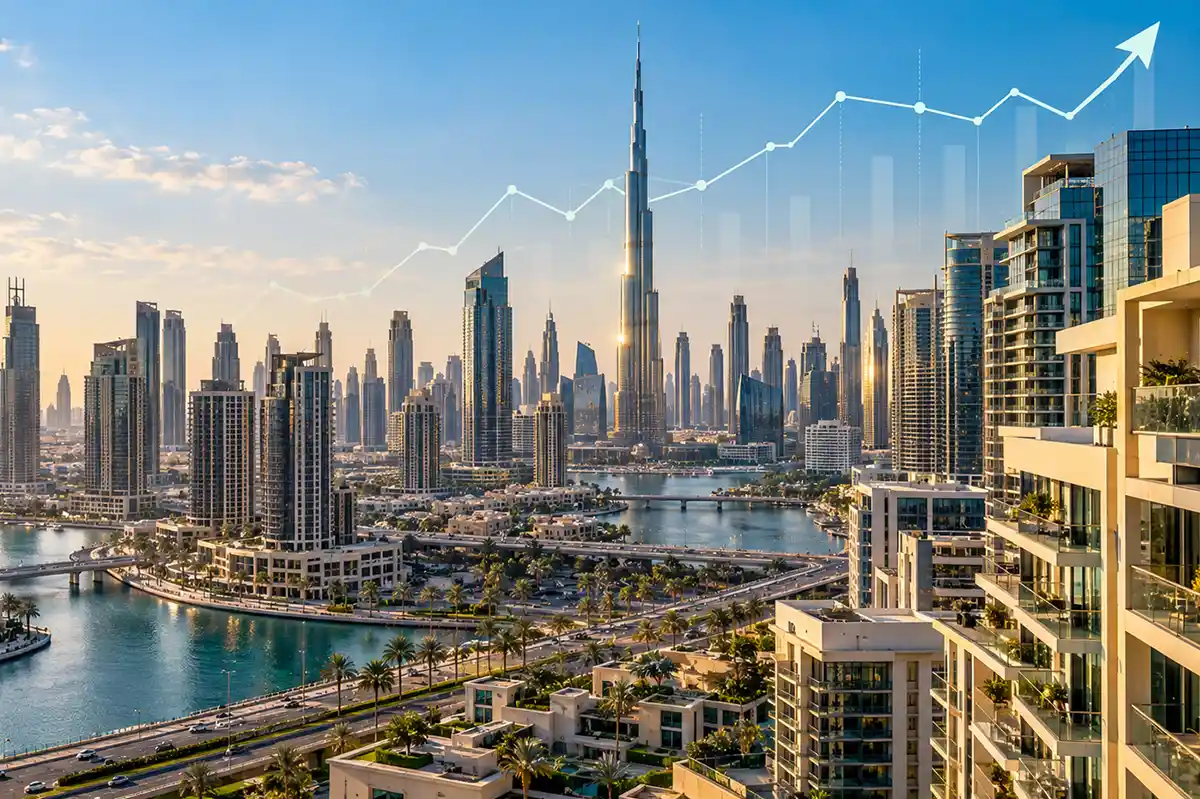
In every instance, the market experienced a short-term period of caution followed by a robust, often record-breaking, recovery. Sophisticated investors look at this track record and recognize that while geopolitical cycles come and go, the UAE's trajectory—defined by long-term strategic planning—remains consistently upward.
Making Informed Decisions
Is the current environment a time for caution? Yes. Prudent investors always assess risk during times of regional tension. However, is it a time to abandon a market that provides one of the most stable regulatory, tax, and infrastructure environments in the world?
The majority of institutional capital is betting on "No." They view the current situation as a sentiment-driven test rather than a structural failure. For the individual investor, the current climate may actually present opportunities: better negotiation margins, flexible payment plans, and the ability to acquire assets at prices that reflect current sentiment rather than long-term value.
Ultimately, the choice to invest should be based on your personal risk tolerance and long-term goals. But if you look at the data, the liquidity, the population growth, and the government’s operational capacity, you will see that the pillars of Dubai’s economy remain as strong as ever.