If you were to look only at global news headlines from early March 2026, you might expect to see a market in retreat. However, if you look at the Dubai Land Department (DLD) dashboard, you see a completely different reality.
On March 2, 2026, the DLD confirmed that February was a record-breaking month, with property sales hitting $16.5 billion—an 18.14% surge in value compared to the previous year. This wasn't a fluke; it was a testament to a market that has matured beyond "sentiment-driven" swings. For the serious investor, the current climate isn't a reason to pause—it’s a data-backed confirmation of Dubai’s status as a global fortress for capital.
The Numbers Don't Lie: Analyzing Q1 2026 Performance
While some analysts predicted a "wait-and-see" approach from investors due to regional tensions, the actual transaction volume suggests that "buy-and-hold" is the dominant strategy.
- January 2026 Surprises: The year began with AED 111 billion in total deals, a staggering 88% increase over January 2025.
- February Momentum: Despite headlines of regional friction, the market processed over $16.5 billion in transactions, proving that institutional and private capital is still flowing in.
- New Blood: More than 10,000 new investors entered the market in the first 30 days of the year alone, marking a 35% rise in first-time buyers.
This data suggests that global investors view regional events as "noise" while viewing Dubai's infrastructure and legal framework as "signal."
High Rental Yields: The Investor’s Ultimate Safety Net
In a volatile world, cash flow is king. Dubai continues to offer some of the highest net rental yields of any major global city, far outperforming London, New York, or Hong Kong.
As of March 2026, yields remain remarkably stable:
- Apartments: Averaging 7.07% (with areas like JVC and Silicon Oasis hitting 8% to 9%).
- Villas: Averaging 4.93%, driven by a massive influx of expatriate families seeking long-term stability.
2026 Yield Snapshot by Community:
| Community | Average Yield (ROI) | Investor Profile |
| Jumeirah Village Circle (JVC) | 7.5% – 8.5% | Yield-focused / Budget |
| Business Bay | 6.5% – 8.6% | Professionals / Corporate |
| Dubai Marina | 5.5% – 6.8% | Short-term / Tourist |
| Palm Jumeirah | 4.5% – 6.0% | Luxury / Capital Growth |
Export to Sheets
These yields provide a significant buffer. Even if capital appreciation were to slow down (which current data suggests it won't), the monthly cash flow into an investor’s pocket remains higher than almost any other safe-haven asset.
The "Cash-Rich" Market: Immunity to Interest Rate Shocks
One of the most significant reasons Dubai's real estate market is resilient to external shocks is its liquidity profile. Unlike Western markets that are heavily leveraged and sensitive to mortgage rate hikes, Dubai is a predominantly cash-led market.
- 70% to 80% of transactions in Dubai are often cash-based, particularly in the secondary and luxury segments.
- Low Mortgage Exposure: Because so many buyers are using their own capital, there is no risk of a "foreclosure wave" or a systemic banking collapse if global interest rates fluctuate or regional tensions rise.
This "equity-heavy" market acts as a shock absorber. When you own the asset outright, you aren't forced to sell during a temporary dip in sentiment, which keeps floor prices high across the city.
Supply vs. Demand: The 2026 Population Boom
A common "bear case" for Dubai is the fear of oversupply. However, the 2026 data clears this up. While approximately 80,000 to 120,000 units are scheduled for completion this year, the population growth is outpacing construction.
- Population Growth: Dubai’s population grew by over 200,000 people in 2025/2026.
- The Math: At an average of 4 residents per household, the city needs roughly 50,000 new units annually just to keep up with organic growth, not including the surge in "secondary homes" for global HNWIs.
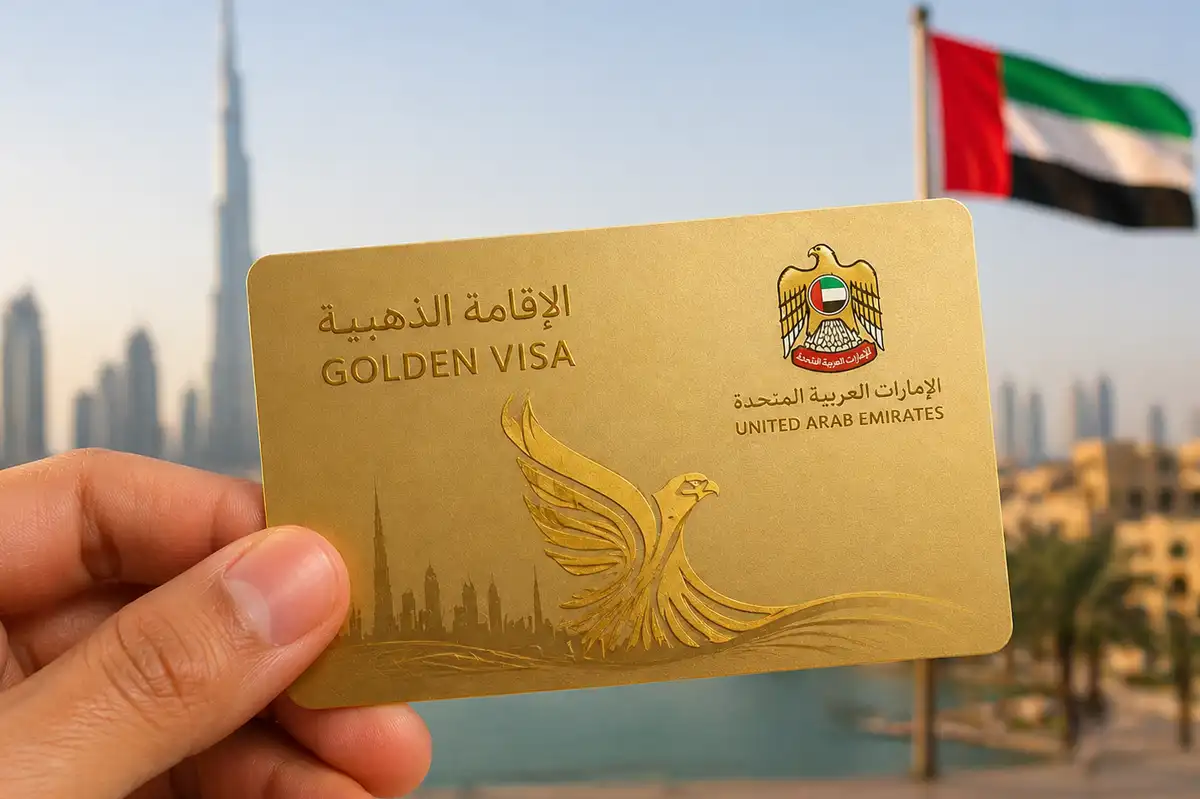
- The "Golden Visa" Anchor: The Golden Visa has fundamentally changed buyer behavior. People are no longer buying "investment units" they plan to flip; they are buying homes. End-user demand now accounts for a significant portion of the market, providing a stable floor that didn't exist in 2008 or 2014.
Construction and Infrastructure: Zero Interruption
Perhaps the most reassuring sign for off-plan investors is that construction has not slowed down by a single day. Despite the regional news, major developers like Emaar, Nakheel, and Damac have confirmed that project timelines remain on track.
The "Jebel Ali" incident of early March was handled with such surgical precision by UAE defense and emergency services that the port was fully operational within hours. For an investor, this proves that the physical supply chain—the materials, the labor, and the logistics—is protected by a world-class security umbrella.
The Maturity of the 2026 Market
Dubai’s real estate market in 2026 is no longer the speculative "wild west" it was twenty years ago. It is a sophisticated, transparent, and highly regulated ecosystem. The recent surge in transaction values amidst regional tension is not a sign of irrationality; it is a sign that the world’s wealthiest individuals have done the math.
They see a city with:
- High Yields to protect cash flow.
- A Cash-Heavy Base to prevent market crashes.
- A Growing Population to ensure long-term demand.
The verdict: If you are waiting for a "crash" to enter the Dubai market, you may be waiting a long time. The current stability is not an accident—it is the result of a deliberate, decade-long strategy to build the most resilient property market on the planet.